Contents
- Pontoon tubes vs. a deck boat's V-hull: the real build difference
- Pontoon stability and safety basics for your group
- How many people each boat type comfortably fits
- Pontoon vs deck boat at a glance
- What a pontoon rental here is built for: fishing, cruising and easygoing watersports
- Maintenance, storage and resale: not a renter's problem
- Matching the boat to the harbor, the river and Southwest Michigan's lakes
- How to book the right pontoon rental
- FAQ
- Book the pontoon built for your day on the water
Choosing between a pontoon and a deck boat comes down to one simple answer for a trip here. Book a pontoon or tritoon for time on the St. Joseph harbor, the river or a Southwest Michigan lake. It gives you more stable, open deck space, and it's the boat you can reserve right now from the local fleet.
This is a renter's decision, not a buyer's. The real question is which boat fits your activity and the water in front of you, not financing, maintenance or resale value. The hull underneath each boat is built differently, and that difference changes how steady the ride feels and how many people comfortably fit on board.
Pontoon tubes vs. a deck boat's V-hull: the real build difference
Hull shape just means the way the bottom of a boat is built. It's the biggest reason these two boat types feel different on the water.
A pontoon boat sits on aluminum tubes instead of a solid hull, which creates a flat, open deck. That open layout means more room for coolers, fishing gear or kids to move around without climbing over seats.
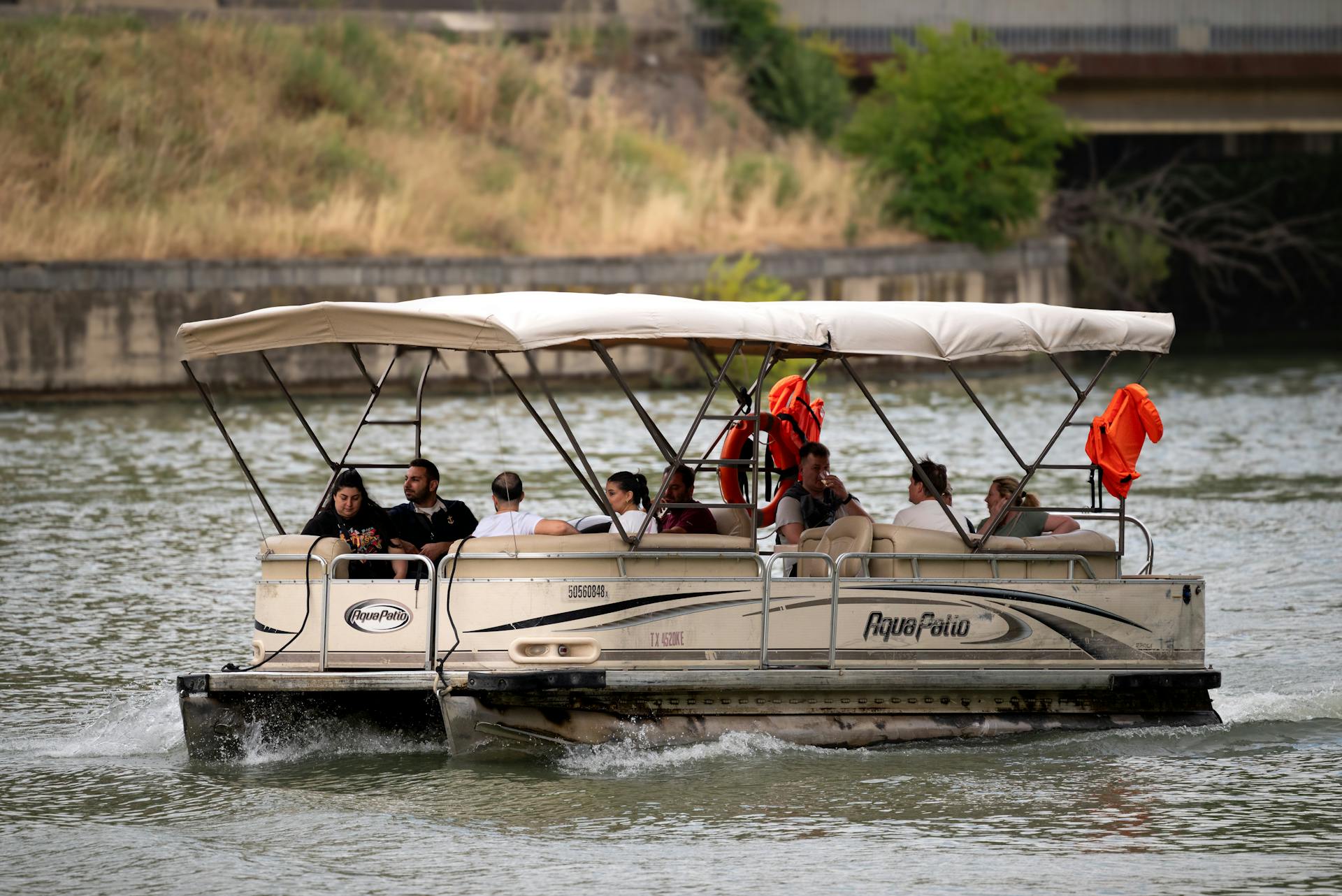
A deck boat uses a different hull shape. Its fiberglass hull flares outward at the top, which is where the extra deck space comes from, according to deck boat specifications from Discover Boating. That flared, V-shaped bottom is called a V-hull.
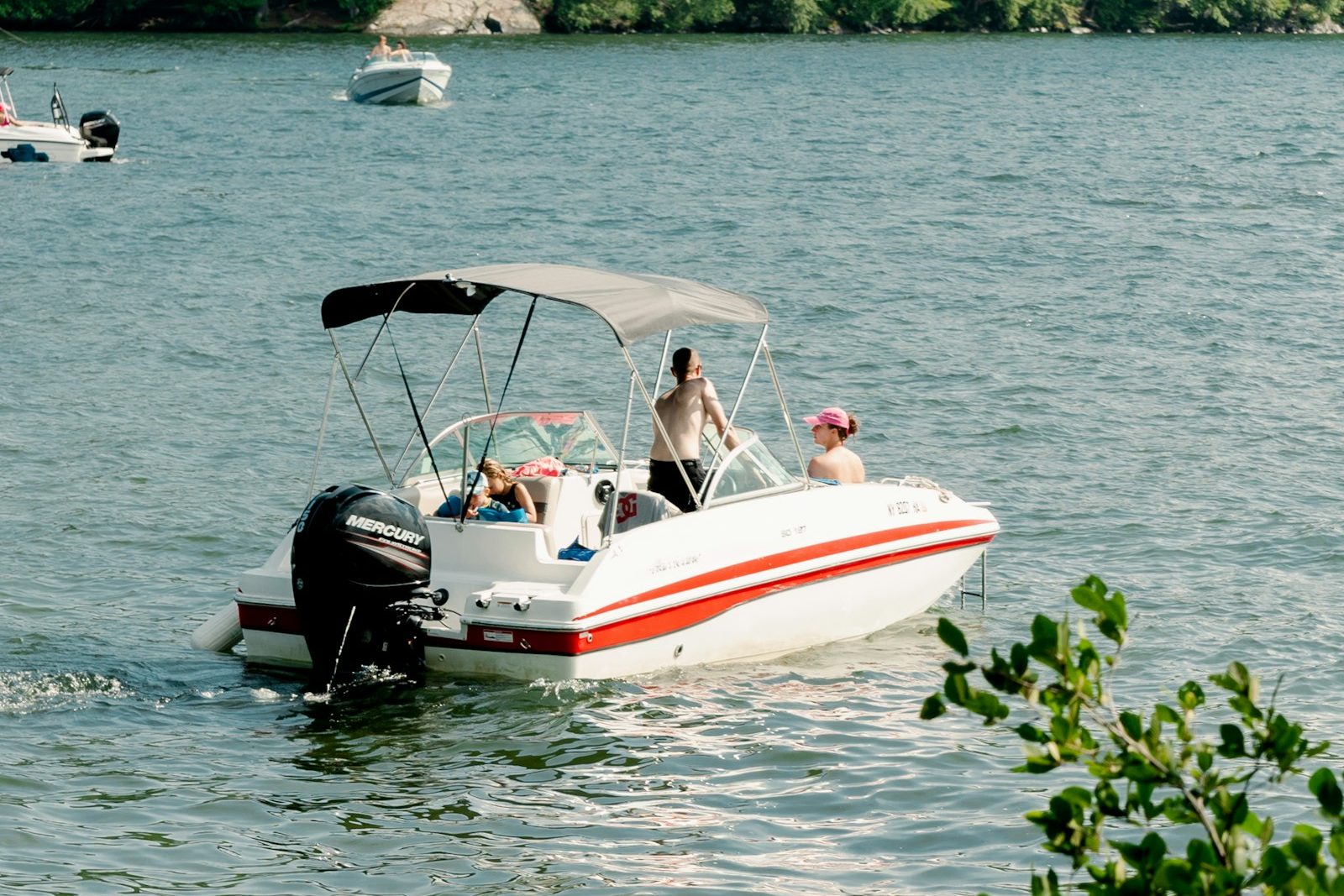
Both shapes show up often in rental fleets, and knowing the name helps you compare options when you book. For a renter, what matters is the shape this creates, not how a manufacturer builds it.
Pontoon stability and safety basics for your group
A pontoon's wide, flat deck gives it excellent stability, according to Discover Boating's pontoon boat page. If your group includes young kids, first-time boaters or anyone unsteady on a moving deck, that stability is worth weighing when you choose a boat.
Safety rules apply no matter which boat you book. Federal law requires children under 13 to wear a Coast Guard-approved life jacket whenever the boat is underway. The Coast Guard also recommends that everyone on board wear a life jacket whenever the boat is underway, according to the U.S. Coast Guard Boating Safety Division. Check the current rule with the Coast Guard before you go.
Captained cruises add another layer of oversight. These trips run under a US Coast Guard 100-ton master license, and the captain stays sober and at the helm for the whole trip.
The St. Joseph River and harbor can feel different from a calm inland lake, especially with wind or boat traffic. Ask about current conditions when you book, so you know what to expect before you head out.
How many people each boat type comfortably fits
Passenger capacity just means how many people a model is built to carry. It's one of the clearest differences between these two boat types. A pontoon boat can carry up to 15 passengers, depending on the model. A deck boat carries up to 14 passengers, depending on the model.
For a bigger group of family or friends, that extra seat or two on a pontoon can be the difference between everyone riding together or splitting into two boats. The local fleet includes the "Liquid Therapy," a 24 foot tritoon that seats up to 12 guests, with a bimini top for shade, a swim ladder for swimming and a Bluetooth stereo. That's the number to picture when you're deciding how many people to invite along.
Pontoon vs deck boat at a glance
The table below lines up the two boat types: how each is built, how stable it is, how many people it fits and which one fits a trip here.
| Feature | Pontoon boat | Deck boat |
|---|---|---|
| Hull shape | Aluminum tubes under a flat, open deck | A fiberglass hull flared at the top, known as a V-hull |
| Stability | Excellent stability | No independently verified comparison available |
| Passenger capacity | Up to 15 passengers depending on the model | Up to 14 passengers depending on the model |
| Best local use case | Hourly rentals, captained cruises and river fishing trips, all on the local pontoon and tritoon fleet | Not part of the local rental fleet; shown for comparison only |
What a pontoon rental here is built for: fishing, cruising and easygoing watersports
Fishing charters run on the St. Joseph River: family fishing trips from June through August, and heated, covered steelhead trips from October through March. That season covers both summer family trips and winter fishing.
The Liquid Therapy already covers the basics for that kind of day, with its shade, swim ladder and stereo. That's enough for fishing, cruising or just floating with friends.
Maintenance, storage and resale: not a renter's problem
Upkeep, winter storage, trailer space and resale value matter if you own a boat. None of that applies when you book one for a day or a trip. A renter never has to think about any of that: you show up, use the boat and hand back the keys. That trade-off, no upkeep but no boat to keep, is really the whole point of renting instead of owning.
Every hourly pontoon rental already includes fuel, life jackets and a 15-minute walkthrough before you leave the dock. Booking is simple too: the site shows real-time availability, holds your card through Stripe, and releases the hold after the rental, with the waiver signed right in the app.
Matching the boat to the harbor, the river and Southwest Michigan's lakes
Hourly pontoon rentals launch from the St. Joseph harbor for two to five hours, with 9 AM or 1 PM start times. That fits a short trip on the harbor or the river without much planning.
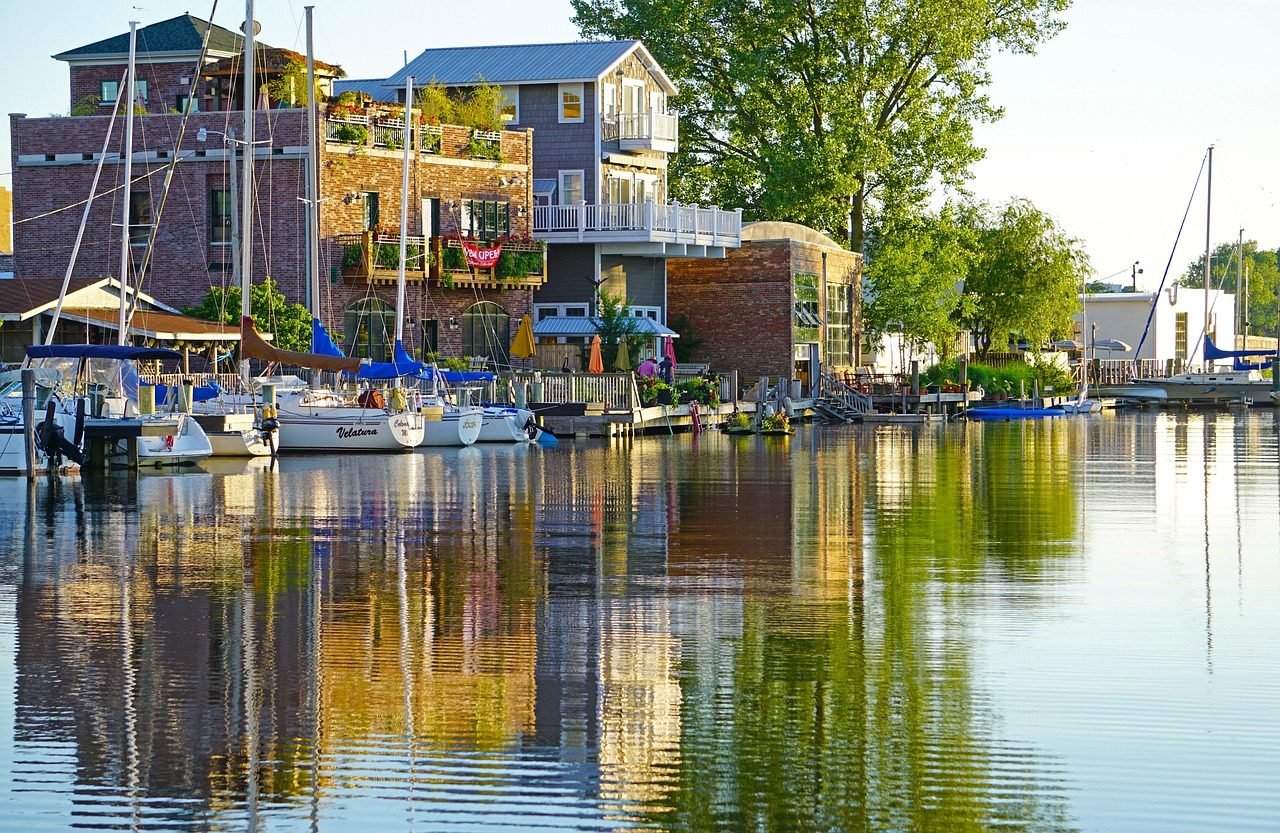
You can add a captain to any hourly rental for a cruise on the harbor or the river. It's booked ahead for a sunset ride, a birthday or an anniversary. This option works well if no one in your group wants to drive, or if you're celebrating a specific occasion.
If your trip takes you to an inland lake instead, drop-off rentals deliver the pontoon straight to your own dock, with a two-day minimum. This option covers lakes across Southwest Michigan, including Paw Paw Lake, Diamond Lake, Gun Lake and Sister Lakes. This fits a weekend at a lake better than a short afternoon on the harbor.
Either way, you're choosing the water first and the rental format second. See the full list of lakes served across Southwest Michigan.
How to book the right pontoon rental
Check available times and book an hourly pontoon rental directly online, or ask about a drop-off rental for a lake trip when you reserve. Whichever format fits your plans, the boat and the water matter more than anything else on a buyer's checklist.
The dock is at 2351 Niles Road, St. Joseph, MI 49085, open Monday through Sunday from 8 AM to 9 PM. Plan to arrive a few minutes before your reservation time to get on the water.
FAQ
Do pontoons flip easily?
Pontoons have excellent stability, thanks to their wide, flat deck. That flat design is what keeps a pontoon steady, so it is unlikely to flip during normal use on calm water. Safety basics like wearing a life jacket still matter every time you go out.
Is a deck boat better than a tritoon?
Deck boats carry up to 14 passengers depending on the model, and pontoons carry up to 15. The fleet available to book here rents tritoons, not deck boats. The Liquid Therapy, a 24 ft tritoon, seats up to 12 guests.
Book the pontoon built for your day on the water
St. Joseph Boat Rentals is family-run, locally owned and operated since 2024. Its hourly pontoon rentals put your group on the water the same day, already stocked with fuel, life jackets and a quick walkthrough. Book a boat and get on the water in the boat built for your plans.